
Spain: Madrid's Luxury Real Estate Market Soars Amid Foreign Investment
Explore how branded residences and Latin American wealth fuel Madrid's luxury real estate market, driving prices to historic highs amid strong demand.
REAL ESTATE LATEST NEWS BREAKING NEWS
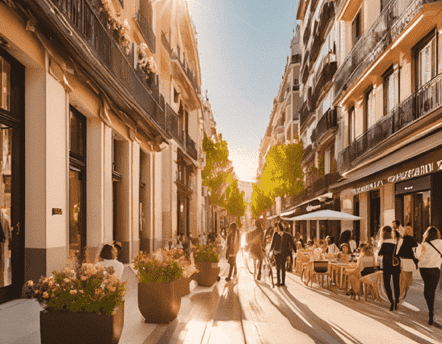
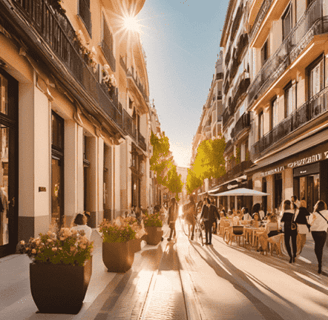
In the vibrant heart of Madrid, a constellation of exclusive properties is emerging, each a testament to architectural elegance and modern luxury. Among these, Serrano 92, Núñez de Balboa 3, Velázquez 53, General Oraá 9, Santa Engracia 65, and Hermosilla 47 (the Mandarin Oriental Residences) stand out as rare gems in the realm of new construction and comprehensive renovations. Nestled primarily within the Salamanca neighborhood—historically the epicenter of Madrid's prime real estate—these developments are also making waves in other affluent districts such as Jerónimos, Justicia, Chamberí, El Viso, and La Finca, all of which are increasingly sought after by discerning buyers.
The luxury real estate market in Madrid is experiencing a renaissance, buoyed by the allure of branded residences and the influx of substantial foreign capital, predominantly from Latin American investors. This surge in interest has propelled property prices to unprecedented heights, driven by a confluence of limited supply and robust demand. Currently, Serrano 92 reigns supreme as the most expensive development on the market, with prices soaring to an astonishing 25,000 euros per square meter—a figure that would have been deemed fantastical just a few years prior.
This exclusive development boasts seven opulent residences, each featuring three bedrooms, communal areas adorned with interior patios, and even a clandestine garden complete with an integrated gallery pool. Remarkably, this project occupies a 4,000 square meter edifice originally constructed in 1929, marking the first new construction initiative on Calle Serrano in the past five years. As Madrid inches closer to the sale prices of other European metropolises like Paris and London, the second-hand property market is also witnessing a surge, with unique homes in prime locations fetching up to 18,000 euros per square meter, particularly those that meet the high standards of discerning buyers—think classic architecture, prestigious entrances, upper-floor apartments, and penthouses with balconies that offer picturesque street views.
On average, the prime price per square meter in Madrid currently stands at 16,500 euros. Foreign buyers, particularly those from Latin America—Mexico, Venezuela, Peru, and Colombia—are the primary catalysts driving this high-end market. These affluent individuals are drawn to Madrid's vibrant lifestyle, rich cultural and gastronomic offerings, security, and legal stability. The arrival of such discerning clientele has fostered a market that is increasingly attuned to their elevated expectations. Madrid, often characterized as a welcoming city, remains relatively affordable compared to its European counterparts, while simultaneously evolving into a more international and cosmopolitan hub.
The profile of buyers is diverse, encompassing not only Latin American investors but also national stakeholders from Barcelona and other provincial capitals. Typically, these are entrepreneurs with flourishing family businesses seeking to diversify their wealth through property ownership in Madrid. Recently, there has been a noticeable uptick in interest from American and French clients, who are increasingly viewing Madrid as a fashionable city ripe with potential for appreciation.
In terms of property preferences, prospective buyers are gravitating towards centrally located homes that offer expansive spaces, top-tier amenities, and communal facilities such as wine cellars, gyms, swimming pools, or spas. These residences often serve as primary or secondary homes. For single-family homes, the demographic is predominantly young foreign families aged 35 to 50, who prioritize proximity to esteemed educational institutions and a stable socio-economic environment. The demand for spacious layouts, multifunctional rooms, and ample outdoor areas is evident, with an unwavering commitment to design excellence and superior finishes.
Price trends indicate that luxury housing experienced a year-on-year increase of 5.5% during the third quarter, according to the Prime Global Cities Index (PGCI) report by Knight Frank. The report underscores Madrid's remarkable stability, with a quarterly growth rate of 1.2% between July and October, bolstered by its investment appeal, quality of life, and the sophistication of an increasingly discerning buyer base, both domestically and internationally. Madrid currently ranks 12th in terms of price appreciation, narrowly trailing behind Lisbon and Perth, both at 5.6%.
On a global scale, the luxury sector has seen a deceleration in price growth, averaging 2.9% annually—significantly lower than the 4.6% average over the past decade. Looking ahead, analysts anticipate continued price growth over the next five years, underpinned by a stable local economy and solid fundamentals. With a constrained housing supply, declining interest rates, and a burgeoning international market, the forecast suggests a trajectory of price increases akin to those experienced by 2025, albeit with greater dynamism, contingent upon a politically stable environment that reassures investors.
Turning to the prime rental market, a similar trend of deceleration is observed. According to the Prime Global Rental Index, rents in major cities worldwide rose by a modest 1.9% during the third quarter, marking the slowest increase since the second quarter of 2021. The rental market is grappling with affordability constraints following a two-year period during which rent growth consistently outpaced inflation across nearly all markets. Despite this slowdown, it is our perspective that the structural shortage of new housing in major urban centers will likely lead to rents rising at a pace that exceeds trend levels in the forthcoming years. The most significant price declines were noted in Toronto (5.6%), followed by Singapore (4.8%) and Hong Kong (0.1%). Conversely, rental yields have surged in cities such as Sydney (8.4%), Zurich (5.6%), Berlin (5.4%), Los Angeles (3.7%), Miami (3.2%), and Auckland (2.9%).