Green Real Estate Trends: Rising Price Premiums
Uncover the latest real estate trends revealing higher price premiums for green properties and their significance in today's eco-conscious market.
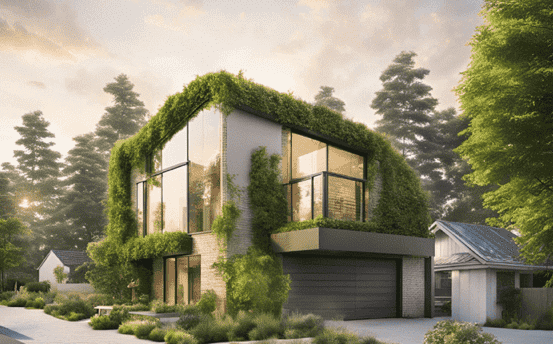
In the realm of real estate, a notable paradigm shift is underway, with Europe emerging as the vanguard of investor and tenant enthusiasm for green real estate. According to the RICS Sustainability Report 2024, Germany is outpacing its peers, with over half of surveyed experts affirming the feasibility of price premiums for sustainable properties. A staggering 84 percent of German professionals report robust demand for green real estate, with 32 percent observing a significant uptick in investor interest, while 52 percent note a more moderate increase. These figures starkly contrast with the global averages, underscoring Europe's preeminence in this burgeoning sector.
The 2024 RICS survey delves deeper, investigating the correlation between sustainable buildings and their market valuations. Globally, 44 percent of respondents contend that green buildings command a rent premium over their non-green counterparts. Specifically, 31 percent anticipate increases of up to ten percent, while 13 percent foresee even steeper hikes. Conversely, a "brown discount"—a reduction in rent for non-green properties—is deemed likely by 31 percent of experts, with 25 percent perceiving neither a surcharge nor a discount. The assessment of green features on purchase prices reveals a more pronounced impact: approximately 50 percent of experts believe that green buildings are appraised at a premium, with a third estimating this surcharge at up to ten percent, and 14 percent expecting even higher increments. Notably, 30 percent of respondents assert that while no price premium exists for green buildings, a "brown discount" is applicable, and 22 percent see neither.
In Germany, the sentiment is markedly favorable, with 56 percent of respondents acknowledging a rent surcharge for green properties. Among these, 41 percent estimate the surcharge at up to ten percent, while 14 percent anticipate increases ranging from ten to twenty percent, and a daring one percent expects surcharges exceeding twenty percent. Interestingly, 33 percent of German experts perceive a "brown discount" instead of a price premium. When it comes to capital values, 52 percent of German professionals assert that green real estate commands higher prices, with 36 percent estimating increments of up to ten percent and 16 percent citing increases between ten and twenty percent. However, 40 percent of respondents recorded a "brown discount."
Investor demand for green real estate is not merely a European phenomenon; globally, nearly half of the surveyed experts report an uptick in interest for green buildings over the past year. In Europe, Asia-Pacific, and the Middle East and Africa, around 50 percent or more respondents have noted this increase, while the Americas lag behind, with only 34 percent reporting similar sentiments. In the Americas, a mere 36 percent of respondents indicate a rise in interest for green buildings, a figure that pales in comparison to other regions. A significant 55 percent of respondents in the Americas report no change in investor interest, a statistic that exceeds the global average of 42 percent. In stark contrast, Europe showcases a robust 68 percent of experts acknowledging increased investor interest in green buildings, with 48 percent noting a moderate increase and 20 percent a significant one.
The RICS report also highlights the importance of resilience to climate change, with over 40 percent of respondents in the Middle East and Africa deeming it a significant or very important factor for tenants and investors. This figure surpasses the global average of approximately 25 percent. The World Bank identifies this region as particularly vulnerable to extreme weather events, high temperatures, and dwindling water resources. Conversely, the UK exhibits a lower concern, with only 21 percent of respondents considering resilience to climate change as essential for investors, and a mere 15 percent for tenants. In Germany, however, the narrative shifts, with 52 percent of experts asserting that resilience to climate change is crucial for investors, while 34 percent of tenants echo this sentiment.
When probing the catalysts behind the surge in ESG (Environmental, Social, and Governance) investing, 38 percent of global respondents attribute it to customer and stakeholder demand. Legal requirements follow closely, influencing 25 percent of the responses. High energy prices and construction costs remain significant factors as well. Notably, only ten percent cite regulatory incentives and the growing availability of ESG-related data as pivotal drivers. In Europe, 34 percent of real estate professionals highlight regulations as a primary motivator for the ESG investment boom, a trend attributed to the European Commission's strategic objectives aligned with the European Green Deal. In Germany, 50 percent of respondents identify regulations and legal provisions as key drivers of ESG investment decisions, with 44 percent pointing to increasing ESG reporting requirements and regulations as influential factors.
The RICS Sustainable Building Index serves as a barometer for tenant and investor demand for green buildings, defined as properties that exhibit energy and resource efficiency, possess a low carbon footprint, and achieve high ratings according to various international sustainability certifications. In 2024, the index reflects a net balance of plus 41 globally (with Europe at plus 65), a slight decline from previous years—plus 44 in 2023, plus 48 in 2022, and plus 55 in 2021. Despite this minor dip, the positive balance continues to signify a sustained appetite for sustainable commercial real estate, suggesting that the green revolution in real estate is far from over.